SEO Conference Recap: Tech SEO Connect 2025
Table of Contents
Last week I attended Tech SEO Connect in Durham (my hometown!). It was professionally energizing and gave me a lot of insight into what to expect across all aspects of digital marketing in the next year.
I went into the conference with a few goals:
Understand the direction the industry is going as AI search reshapes the Internet
Identify one or two key technical SEO disciplines to dive deeper into to provide a more well-rounded service to my clients
Meet other SEOs to bounce ideas off of and reach out to if I get in too deep with my own clients
I was pretty successful on all three fronts!
Here are my top takeaways and impressions from the event!
Top Takeaway: Information Architecture is the New Black
Information Architecture has always mattered for SEO, but after this conference, I’m convinced it’s about to become an even bigger differentiator for AI visibility.
It was the underlying theme of four very actionable on-page SEO tweaks that were emphasized at the conference:
1) Schema isn’t optional anymore.
Adding Schema.org vocabulary to your pages helps teach LLMs the relationships between your company, your people, your products, and your expertise. This will likely start making a difference in SERP and AI visibility in the future, and it will help you fight against imposters using your brand nefariously (for example, someone buying the .net version of your domain, doing better SEO than you and showing up higher in a SERP to scam people). As one speaker put it: “Schema controls the narrative.”
This is the main technical SEO area I’ll be diving deeper to understand in 2026, because I think it’s an area that can benefit from better coordination between content experts and technical experts.
2) Topic hubs beat chaotic blog archives.
If you have enough content — let’s say more than 100 blog posts — it’s time to start thinking about how to organize them more meaningfully than the typical blog home page with hundreds of posts organized only by chaotic tags/categories. Instead, it’s time to start thinking about Topic Hubs, similar to what IBM has done with its Learning Hubs, which repackage a lot of previously published content into a great educational resource. This will help both humans and search engines understand your topical expertise and discover relevant content.
3) Structure needs to support storytelling.
Again, this isn’t really new, just more important than ever. Blog posts need to follow both a logical structure and have an HTML structure that supports the story being told. In practice, this looks like starting with a “Key Takeaways” list at the top of the post, ideally in bullet point form, and then proceeding through a topic logically in the content itself. It also means using H2s, H3s, and H4s logically to nest topics inside of each other within blog posts (another age-old on-page SEO best practice that’s now more important than ever).
4) URL slugs are an AI’s first touchpoint with your content.
I’ve been persnickety about URL slugs since my first day as a content strategist at Grow and Convert and it was gratifying to see Josh Blyskal highlight their importance for AI visibility. The URL markets your page’s content to the LLM (and to humans!). The best practice (for now): no more than 5-7 natural language words, ideally matching or closely matching the query you want to rank for: Here’s an example: www.oliviabarrow.com/blog/how-much-does-seo-cost
All of this made me want to find a Library and Information Science PhD student at UW and ask them to please come share their expertise on “managing, organizing, and making information accessible” with the SEO world because I’m afraid we’re all about to reinvent the wheel and pat ourselves on the back for doing so.
How to Game AI Visibility (for Now)
Many of the speakers at Tech SEO Connect shared validated best practices for improving your chances of getting cited by LLMs/AI Overviews. They also debunked many, including LLMS.text and alternate versions of web pages just for crawlers.
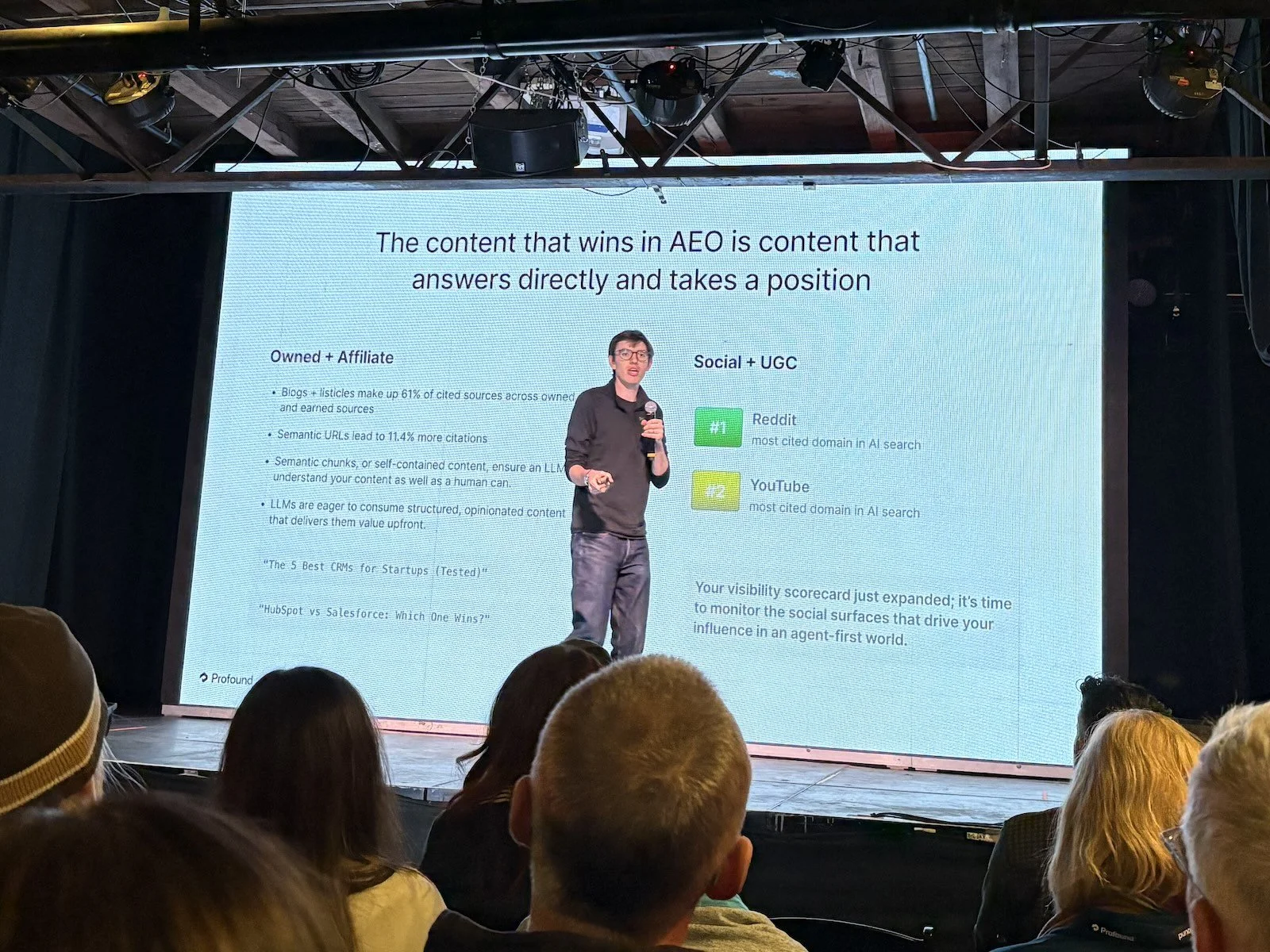
One that stood out (it’s written in all caps in my notes): TAKE A POSITION! Gone are the days of the “unbiased listicle” that presents 10 product alternatives (or 57, because why not overwhelm people while you’re at it??) without explicitly recommending any of them. If you want to be cited by AI, share a strong opinion about whether a product is actually good or not, and for exactly what use cases. Fun fact: this is why Reddit is showing up all over AI citations, not because of some Illuminati backhanded deal between Reddit and the devil. I’m pretty sure this quote in my notes is from Josh Blyskal and it sums it up nicely: “Answer engines love user generated content because they’re an index of human opinion.”
Another actionable AI visibility insight: for the moment, all of the LLMs exhibit a huge recency bias. In one study, about 75% of all AI citations went to content that was less than 20 weeks old. One the one hand, yes, we all want the latest content. But on the other hand, will this open up the opportunity for bad actors to supplant reliable, authoritative content with misinformation just because it’s fresh? Of course, the LLMs have safety checks in place, and freshness is only one of many ranking factors, so maybe this concern is unfounded. On the plus side, it does look like it opens up an opportunity for smaller/newer brands to compete alongside the biggest names if they’re able to provide a more recently updated resource.
But the big takeaway for everyone on the content side of SEO is this: ** Updates need to be a mandatory part of the content cycle **.
Collective Impact: Are We Making The Internet a Better Place?
The collective impact if we all put the “best practices of the moment” in practice at scale was on my mind constantly — and also, what about the ethics of it all?
Cecily Crout, a Search, UX, & Analytics consultant that I was lucky enough to get to know, mentioned that she includes the SEO Code of Ethics on her website, which I’d never heard of before (but definitely agree with). Also, Cecily shared some great takeaways from the conference on her website!
But something that stood out to me with each presentation was a growing concern over what I’ll call Making the Internet Better. Are we as SEOs making the Internet a better place?
This has always been my north star as a digital content creator, and I have naively assumed that many, or even most, of the other global citizens of the web shared my passion. But of course, they don’t. And most of the people whom I would blame for blatantly making the Internet a worse place probably have a job that depends on them doing the kind of things that make the Internet worse (and/or are actually victims of human trafficking).
But I’m not just talking about cybercrime. I’m talking about all of the brands that are flooding into Reddit with fake accounts to post links to their products, or subreddit moderator abuse like Lars Lofgren has reported on. Or THIS ridiculous Goodreads review of the incredibly touching novel Atmosphere by Taylor Jenkins Reid that is so obviously AI-generated (or at least, heavily AI-assisted without a human review to remove the glaring factual errors) that I want to vomit.
I will remain committed to Making the Internet Better. I continue to believe that this attitude will make my content (and my clients’) win in the long run, even if we miss out on short-term gimmicky tricks to boost visibility.
Similarly, I’m very mindful of the impact of homogenous content on human attention spans. “Chunking” was a buzzword at the conference, which refers to writing in shorter paragraphs that get more directly to the point. If everyone does this, will all content on the web end up feeling identical? Endless bite-size bits of information — pretty much the opposite of this blog post. How can you tackle complex topics with that approach? How can you have fun as a writer? Or similarly, adding FAQs to product and article pages is a best practice being shouted from the rooftops for improving AI visibility. However, the reader experience of seeing endless FAQs is obnoxious. Just because something works doesn’t mean it’s good for the Internet or the humans using it.
Can SEO Still Drive Organic Leads for Your Brand?
The elephant in the room was the big question: is SEO still a viable channel for organic leads? Dozens of best practices were shown for improving AI visibility (including one very hot tip from Cindy Krum about the value of video content — which is harder for AI to steal and will probably start showing up in Google’s AI Overviews very soon).
Only one person (heck yeah Jamie Indigo!) asked the question: if search engines/generative engines no longer send you any traffic, does it make any sense to even compete for visibility?
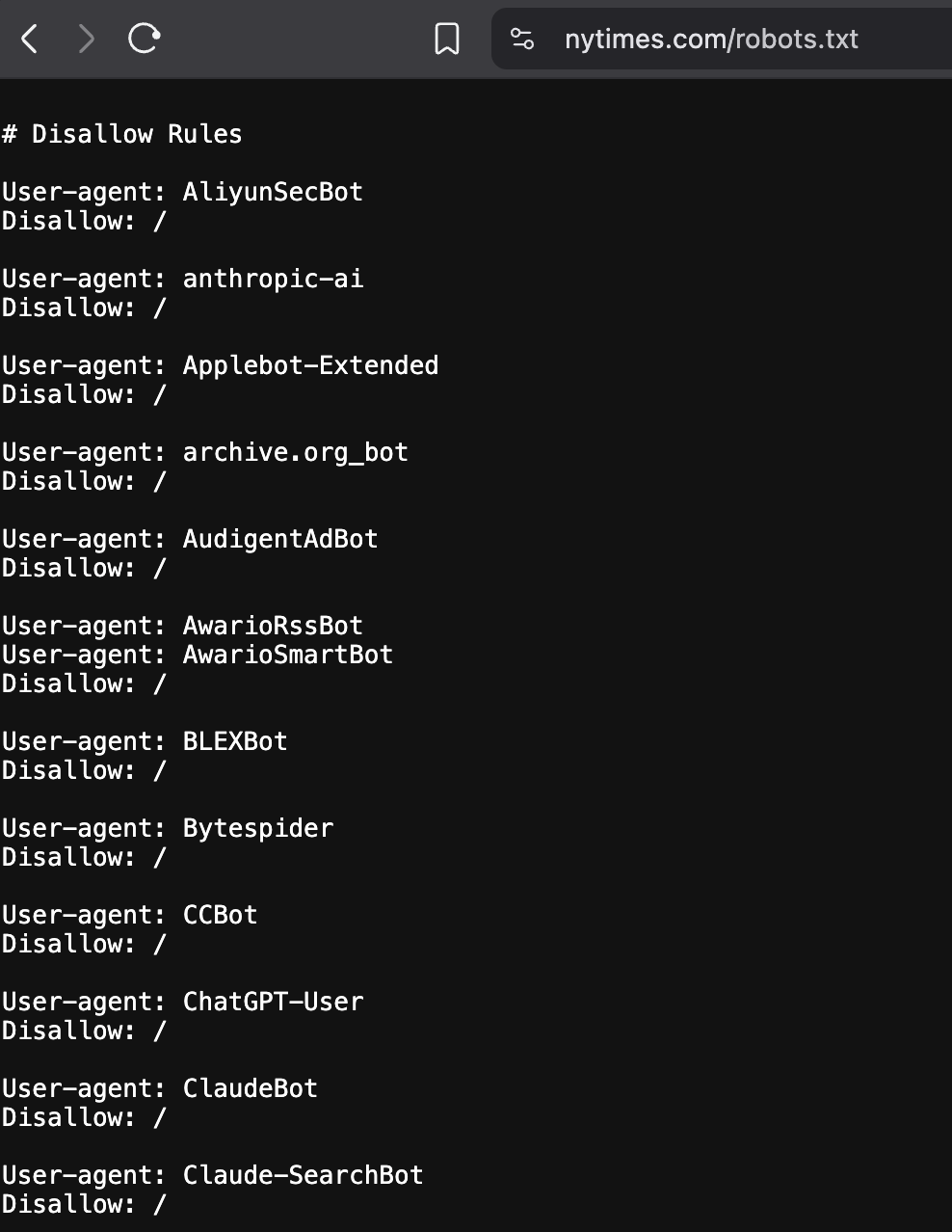
If your product is content, I don’t see how it makes sense anymore, and I think we will soon see the rest of the biggest news/content brands following the New York Times’ and WSJ’s approach of blocking all bots and abandoning Google.
If you’re a B2C e-commerce site, yes, you want to show up, because an AI Overview can’t replace physical products, so people will still need to click into your site. But very soon the buying experience will probably look different as Agentic AI becomes a real thing. This was — sort of surprisingly — barely discussed at the conference. But brand visibility will still be huge for e-commerce, so for that reason, AI visibility will still be valuable.
If you’re a B2B product or service, I think search is still a great way to boost visibility for your brand and will likely continue to drive traffic because there is so much nuance to finding the right solution for each use case. Buyers who want to research products/services online before buying will want to dive deeper, leading them to click through to your site.
Finding My People During the Networking Breaks
“Connect” was in the name, and the connections I made were the most valuable part of the experience. Not to say that the talks weren’t insightful, but getting to chat with other professionals across all of the different disciplines within SEO (yes! There are niches inside of SEO) and hear about the challenges they’ve been facing this year (it’s been a year, y’all) was a big morale booster for me.
The format of the conference was especially helpful for this. The day was broken up with 30-minute networking breaks between every two talks, and there were interactive activities in the networking area (including puppies! And a live-poetry-writing fox!) to help people connect with each other more naturally. That was cool.

Also, it was during a lunch with Lily Ray and Josh Squires from Amsive that I learned that Google’s Helpful Content update actually squashed some actually helpful content (like recipe sites and travel blogs) that was just over-monetized. I was living in my B2B bubble and drinking Google’s PR Koolaid thinking that they had perfected their techniques for distinguishing spam from not-spam, and I was wrong.
TL:DR: SEOs are Nerds; Would Go Again
If Tech SEO Connect keeps happening in the Triangle area of North Carolina, it will keep being on my shortlist of conferences to attend in future years. It was well worth two days of my time, and it was awesome to meet so many brave nerds who are deeply invested in such a complex and ever-changing discipline.
Need Help Retooling Your Content Strategy for AI Visibility?
I help B2B companies that serve a national audience build content marketing systems that boost their visibility in search engines and LLMs and generate leads.
I’m available for one-off consultations as well as monthly retainers that come with only a 30-day commitment. If you’re interested in hiring a content partner who will be an asset to your brand, schedule a free consultation.